
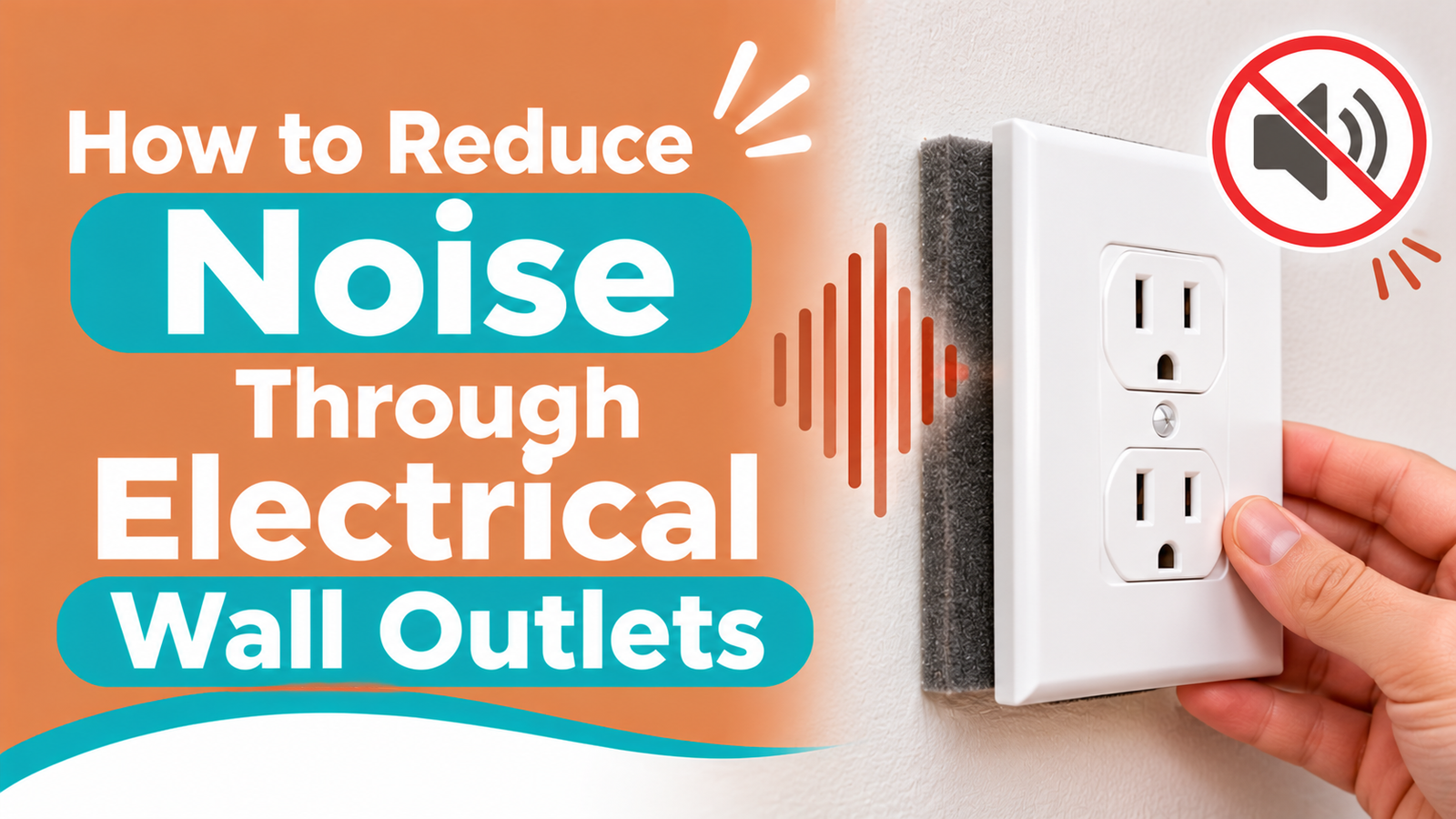
If you have ever heard your neighbor’s TV or a roommate’s late night phone call as if they were sitting beside you, there is a good chance your outlets are part of the problem. Knowing how to reduce noise through electrical wall outlets can make a real difference, because those small openings are some of the weakest spots in an otherwise solid wall. The good news is that most fixes are cheap, quick, and well within reach of a careful homeowner or renter.
Why Outlets Let Noise In
A wall works as a sound barrier because it is dense and continuous. An electrical outlet breaks that continuity. Behind the faceplate sits a box, usually plastic or metal, that has been cut into the drywall. Around that box there are often small gaps, and the back of it may be only a thin layer of material away from the room next door.
Sound travels as vibration through air and solid surfaces. When there is a gap, even a tiny one, sound slips right through. If outlets on opposite sides of a wall sit in the same stud bay, directly back to back, the problem gets worse because there is almost nothing between the two rooms.
Start by Finding the Weak Spots
Before buying anything, spend a few minutes listening. Have someone play music or talk on the other side of the wall while you hold your ear near each outlet, light switch, and nearby gap. You will probably notice that some outlets leak far more sound than others. Start with those.
Also look for gaps around the cover plate. If you can see a thin line of shadow between the plate and the wall, air and sound are moving through it.
Safety Comes First
Always turn off the power at the breaker before touching an outlet. Use a voltage tester to confirm it is dead, even if you are only removing the cover plate. If you are not comfortable working near wiring, hire a licensed electrician. This is a small job for them, and it is not worth the risk.
Seal the Gaps with Acoustic Caulk
Once the power is off and the cover plate is removed, check the space between the electrical box and the drywall. Fill any gaps with acoustic sealant. This is a flexible, paintable caulk that stays soft, so it keeps absorbing vibration rather than cracking over time.
Apply a thin, even bead around the outside of the box where it meets the drywall. Do not push sealant into the box itself or onto any wires or terminals. Let it cure fully before reassembling.
Use Putty Pads Behind the Box
Acoustic putty pads are one of the most popular solutions, and for good reason. These are dense, moldable sheets that you wrap around the back and sides of the electrical box. They add mass and fill the leftover gaps, which cuts down on how much sound passes through.
Look for pads that are rated for use with electrical boxes, since some products are not suitable. Press them firmly so they sit snug against the box with no air pockets. For a metal box, check the product instructions to make sure it is compatible. A pad on every outlet along a shared wall usually gives a noticeable improvement.
Add Foam Gaskets Behind the Cover Plate
Foam gaskets are thin pads that sit between the cover plate and the wall. They cost very little and take about a minute to install. They block air movement around the plate and help seal the small gap between the plate and the drywall. They will not stop all noise on their own, but combined with sealant and putty, they add another layer of protection.
Offset Your Outlets When Possible
If you are remodeling or already have the wall open, placing outlets in different stud bays on each side of the wall is one of the best long term fixes. Even moving them a single stud space apart prevents the direct path that sound loves to follow. It is a lot more work than sealing, but it solves the issue at its source.
Think About the Wall Itself
Outlet fixes help, but they cannot fully overcome a thin or hollow wall. If your noise problem is severe, consider adding mass to the wall. Options include a second layer of drywall with a damping compound between the layers, or mass loaded vinyl behind new drywall. Treating the outlets and the wall together gives the best results.
What About Electrical Noise?
Sometimes people searching this topic mean the buzzing or humming that comes from the outlet itself, not sound traveling through it. A buzz can come from a loose connection, a failing dimmer, or an overloaded circuit. That kind of noise can be a warning sign, so do not ignore it. If an outlet crackles, smells hot, or feels warm, stop using it and call an electrician right away.
Frequently Asked Questions
Can outlets really let that much noise through a wall?
Yes. Because the box removes part of the wall’s solid material and often leaves small air gaps, sound can pass through much more easily than it does through the rest of the wall. Back to back outlets are especially bad.
Is acoustic putty safe to use around electrical boxes?
It is when you use a product rated for that purpose and install it correctly. Keep it away from wiring and terminals, and follow the manufacturer’s instructions. If you are unsure, ask a licensed electrician.
Will foam gaskets alone solve my noise problem?
Probably not. They help with air leaks around the cover plate, but they work best alongside acoustic sealant and putty pads. Think of them as one piece of a larger fix.
Do I need an electrician to do this?
Not always. Sealing around the plate and adding a gasket does not require touching wires. Anything involving removing the outlet, working inside the box, or moving outlets should be done with the power off, and many people prefer to hire a professional for it.
How much quieter will my room get?
It depends on your wall and how many weak spots you treat. Sealing outlets can noticeably cut down sharp sounds like voices and TV audio, but it will not make a thin wall fully soundproof. For the biggest improvement, combine outlet fixes with other wall upgrades.

I’m Alex Morgan, a soundproofing researcher at Sound Proof Guides. I enjoy exploring practical ways to reduce unwanted noise, improve room acoustics, and make living spaces more comfortable. Through my articles, I share easy-to-follow soundproofing guides, DIY solutions, helpful tips, and product recommendations to help readers find the right solutions for their noise problems.