
If you live in an older home, you already know the drill. A truck rumbles past, and you feel it in your chest. A neighbor’s dog starts barking at 6 a.m., and it sounds like it’s in your bedroom.
The good news is that learning how to soundproof old windows without replacing them is entirely doable, and you don’t need a contractor or a huge budget to get noticeable results. Old windows leak sound for the same reasons they leak air: gaps, thin glass, and tired frames. Fix those, and the noise drops fast.
Why Old Windows Let So Much Noise In
Before you spend a dime, it helps to know what you’re fighting. Sound travels through air and through solid material. In an old window, it usually sneaks in three ways.
First, through gaps around the sash and frame, where weatherstripping has cracked or disappeared. Second, through the glass itself, since single pane glass vibrates easily and passes sound along. Third, through the wall around the window, where old caulk has shrunk and left tiny openings.
Sound is a bit like water. If there’s even a small opening, it finds it. That’s why sealing comes first, and everything else builds on top of it.
Start by Finding the Gaps
Close the window, turn off the lights, and have someone shine a flashlight around the edges from outside while you look from inside. Any light you can see is a path for sound. You can also run a lit incense stick near the frame on a windy day and watch where the smoke wobbles.
Make a quick list of the problem spots. You’ll usually find them along the bottom of the sash, where the two sashes meet in the middle, and around the outer trim.
Replace Worn Weatherstripping
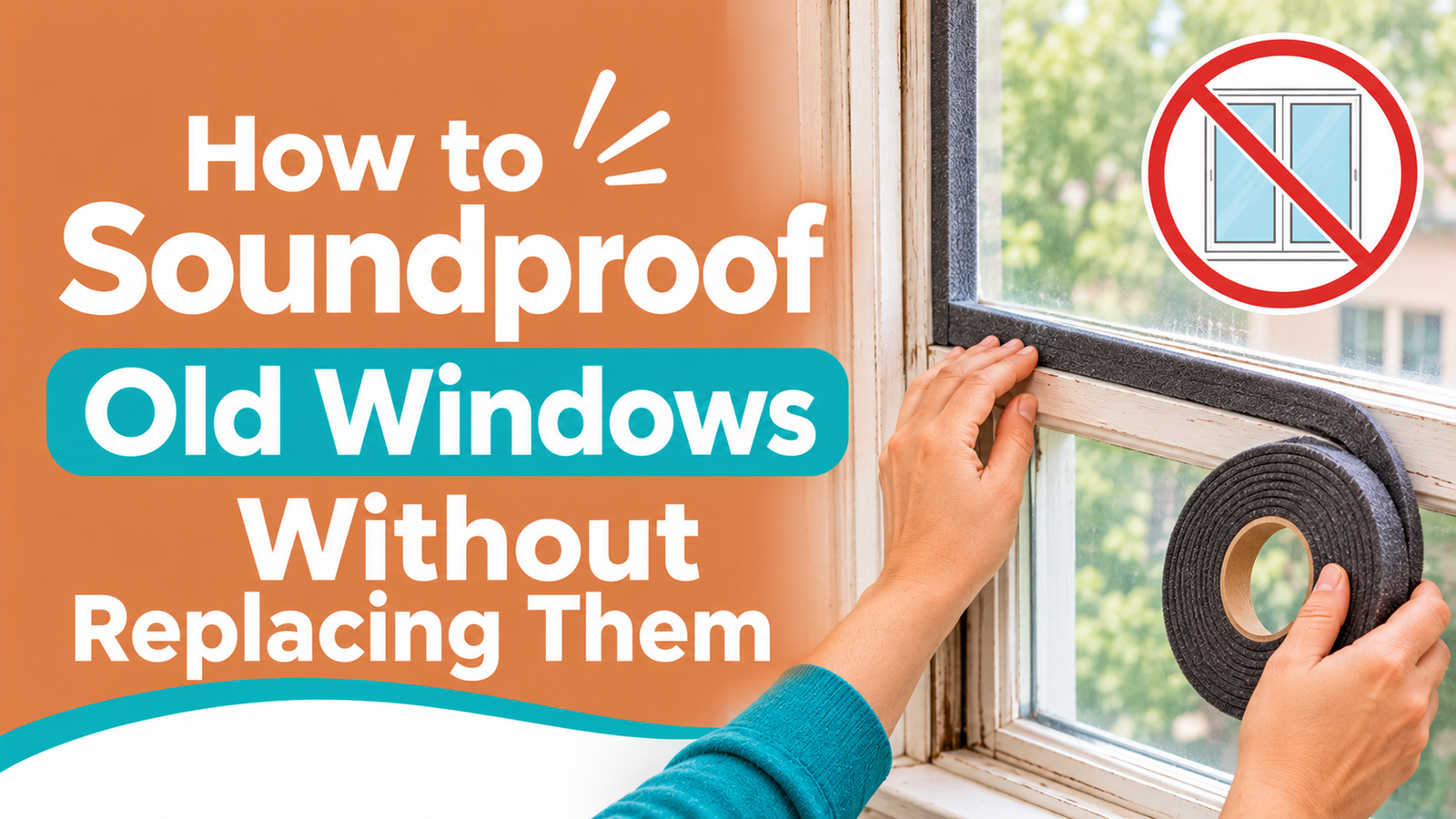
This is the cheapest fix and often the most effective. Peel off the old, brittle weatherstripping and clean the surface with a damp cloth. Then apply new self-adhesive foam tape or V strip (also called tension seal) along the edges where the sash meets the frame. Foam tape works well for flat surfaces, while V-strip is better for the sides of sliding or double hung windows.
Pick a thickness that compresses slightly when the window closes. If it’s too thin, gaps stay open. If it’s too thick, the window won’t latch properly. Spend a few minutes testing before you stick down the whole length.
Recaulk the Frame
Look at the joint where the window frame meets the wall, both inside and outside. If the caulk is cracked, shrunken, or missing, scrape it out with a putty knife and apply fresh acoustic sealant or a good quality silicone. Acoustic sealant stays flexible and doesn’t harden over time, which makes it ideal for blocking sound.
Cut the nozzle at a small angle, apply steady pressure, and smooth the bead with a damp finger. It takes about an hour for an average window and costs less than a pizza.
Add Heavy Soundproof Curtains
Thick curtains won’t stop noise completely, but they take the edge off, especially echo and higher pitched sounds like voices and traffic hiss. Look for curtains labeled as acoustic or blackout with a dense, multilayer lining. Mount the rod a few inches above the window and let the fabric reach the floor or at least the sill, with some extra width so the curtain hangs in folds.
The heavier and fuller, the better. Velvet and thick polyester blends tend to perform well. They also help with drafts and light, so you get a few bonuses.
Try Window Inserts
If you want a real jump in performance, window inserts are the best option short of replacement. These are clear acrylic or glass panels that sit inside your existing window frame, creating an air gap between the old window and the new panel. That gap is what does the heavy lifting, because sound struggles to cross two layers separated by air.
You can buy custom made inserts that press into the frame, or go the DIY route with acrylic sheets and magnetic or compression-fit edging. Professionally made inserts can cut noise dramatically, sometimes by half or more, and they’re removable, which matters if you rent or live in a historic home with restrictions.
Use Soundproofing Window Film or Laminated Glass Film
Window film alone won’t turn your bedroom into a recording studio, but thick laminated style films add mass to the glass and dampen vibration slightly. Think of it as a small upgrade rather than a main solution. It works best when paired with sealing and curtains.
Fill Large Gaps with Backer Rod
If you find gaps wider than a quarter inch around the frame, caulk alone may sag or crack. Push foam backer rod into the opening first, then cover it with caulk. This gives the sealant something to grip and creates a denser barrier. It’s a trick pros use all the time, and it’s easy to do yourself.
Add Furniture and Soft Surfaces
Sometimes the final few decibels come from what’s inside the room. A bookshelf filled with books placed near the window, a thick rug, and upholstered furniture all absorb sound that does get through. Hard, bare rooms bounce noise around and make it feel louder than it is.
What to Expect Realistically
No budget method will make outside noise vanish. But sealing gaps, adding a second layer like an insert, and hanging heavy curtains together can make a room feel noticeably calmer. Many people report that low rumbles remain, while voices, barking, and street chatter fade into the background. Start with the cheapest steps, test the difference, and add layers only if you need more.
Frequently Asked Questions
What is the cheapest way to soundproof old windows?
Replacing worn weatherstripping and recaulking the frame is the cheapest route. A few dollars in foam tape and a tube of acoustic sealant can block a surprising amount of noise.
Do soundproof curtains really work?
They help, but they’re not magic. Heavy, multilayer curtains reduce echo and soften mid- to high frequency sounds. They work best when combined with sealing gaps and adding window inserts.
Are window inserts better than double glazing?
Double glazing is still stronger overall, but good inserts come close at a fraction of the cost, and you don’t have to remove your original windows. That makes them a smart choice for renters and older homes.
Can I soundproof windows if I rent?
Yes. Removable weatherstripping, tension fit inserts, and thick curtains leave no permanent marks. Just avoid heavy caulking on frames if your lease prohibits changes.
How long does it take to soundproof an old window?
Basic sealing takes about one to two hours per window. Installing inserts or DIY acrylic panels can take an afternoon, depending on the size and how precise you want to be.

I’m Alex Morgan, a soundproofing researcher at Sound Proof Guides. I enjoy exploring practical ways to reduce unwanted noise, improve room acoustics, and make living spaces more comfortable. Through my articles, I share easy-to-follow soundproofing guides, DIY solutions, helpful tips, and product recommendations to help readers find the right solutions for their noise problems.