
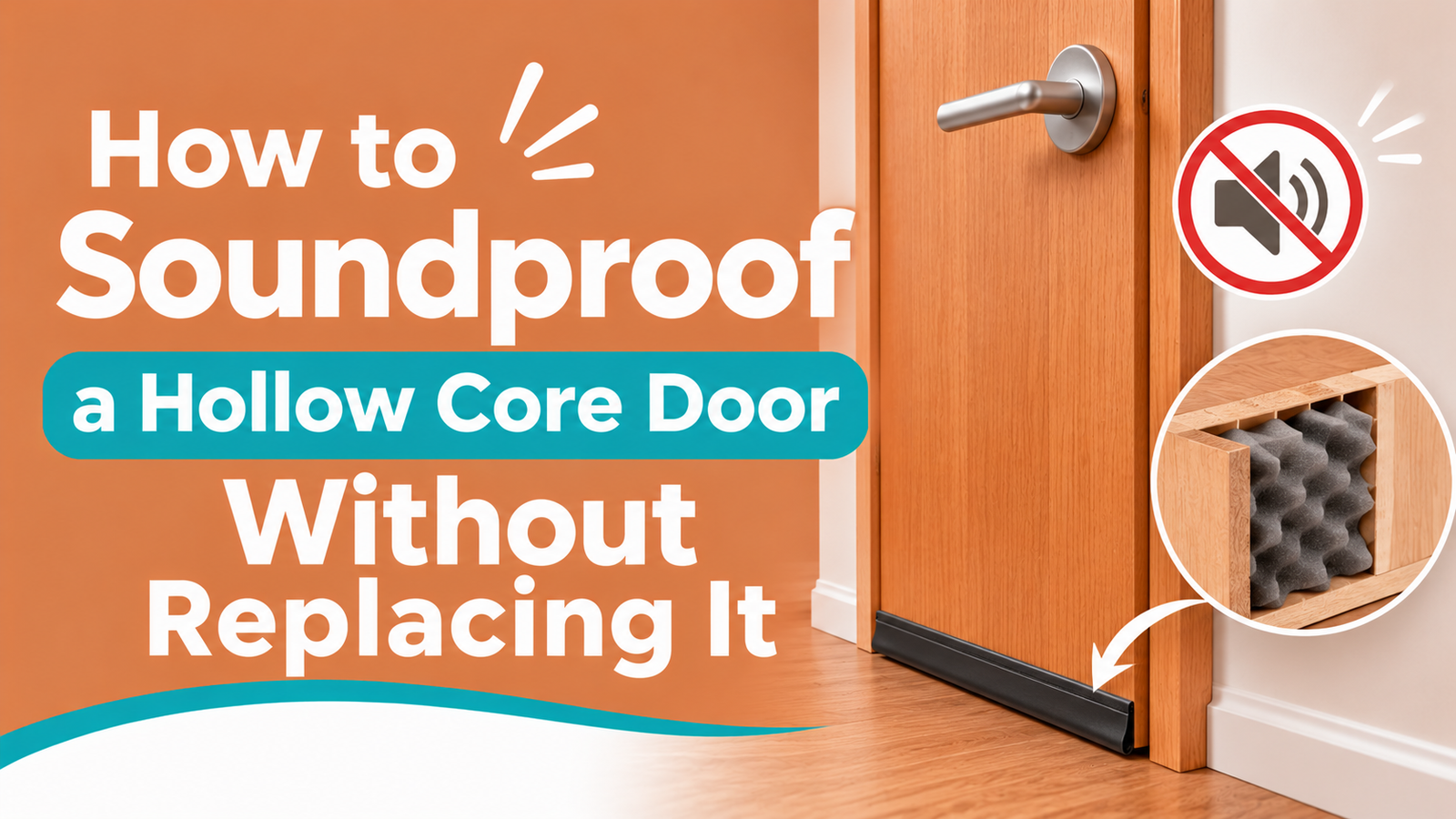
If you live in a house or apartment with thin interior doors, you already know the problem. Someone watches TV in the next room, and you hear every word. A phone call turns into a group conversation. If you are wondering how to soundproof a hollow core door without replacing it, the good news is that you can get a big improvement for very little money, and you will not need to take the door off its hinges or hire anyone.
Hollow core doors are light because they are mostly air inside, with a thin skin of wood fiber or hardboard on each side. That design is cheap and easy to install, but it does almost nothing to stop sound. Noise passes through the thin panels easily, and it also sneaks through the gaps around the door. Fixing both problems is the secret to getting real results.
Start With the Gaps
Before you add anything heavy, look at the edges of the door. Close it and turn on a light in the room behind it. If you can see light along the bottom or sides, sound is leaking through the same spots. Air gaps are responsible for a surprising amount of noise, often more than the door itself.
Weatherstripping is the cheapest fix. Adhesive foam tape or rubber seal strips run along the top and both sides of the door frame, so the door presses against them when it closes. Pick a strip that is thick enough to compress slightly without making the door hard to shut. Clean the frame with a damp cloth first so the adhesive sticks properly.
Seal the Bottom of the Door
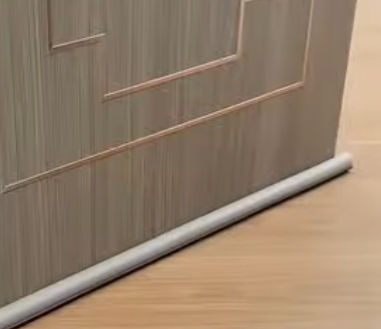
The gap under the door is usually the biggest leak. A door sweep attaches to the bottom edge and drags lightly across the floor, closing the space. Look for one with a rubber or silicone fin rather than a thin plastic strip, since those seal better and last longer.
If you rent or do not want to drill, an automatic door bottom or an adhesive sweep works fine. You can also use a door draft stopper, the long fabric tube you slide along the base. It is not the prettiest option, but it works well and you can move it between doors.
Add Mass to the Door
Sound blocking comes down to mass. Heavier material stops more sound, and hollow doors have almost none. You can add weight without replacing anything.
Mass loaded vinyl is a popular choice. It is a thin, dense sheet that you cut to size and attach to the face of the door with adhesive or screws. You can then cover it with fabric, paint it, or fit it under a decorative panel so it looks tidy. Even one layer makes a noticeable difference.
Another option is a soundproofing blanket or acoustic quilt hung over the door. Many people use moving blankets with grommets and hang them from hooks. They are not elegant, but they are very effective for a home office, a bedroom, or a music corner where looks matter less.
Fill the Hollow Space If You Can
Some people go one step further and treat the inside of the door. If your door has a small removable panel or you are comfortable drilling a couple of holes, you can fill the hollow cavity with insulation foam or acoustic filler. This reduces the drum effect, where the door vibrates like a speaker cone.
This is optional and a bit more work, so do it only if surface treatments are not enough. Test with a small amount first, because overfilling can warp thin door skins.
Use Acoustic Panels and Soft Materials
Foam panels and fabric covered acoustic boards help absorb sound on your side of the door, which reduces echo and helps with how voices carry. They will not block noise on their own, but combined with seals and added mass they make the room feel quieter.
A heavy curtain hung over the door works on the same idea. It adds mass, covers gaps, and softens the space. Look for thick, lined fabric rather than thin decorative drapes.
Do Not Forget the Door Frame and Hinges
Rattling is a common problem. Check that the hinges are tight and the latch is not loose. A door that wiggles in its frame will let more noise through and may buzz when bass sounds pass nearby. Tightening the screws or adding a small strip of felt where the latch meets the frame can quiet things down.
If the frame has gaps against the wall, a bead of acoustic caulk will seal them. This takes five minutes and costs very little.
What Results Should You Expect?
Be realistic. A hollow core door will never perform like a solid wood or specialty acoustic door. But with weatherstripping, a bottom sweep, and one layer of added mass, most people notice speech becoming muffled and hard to understand, which is usually the goal. Loud music or shouting will still be audible, just much softer.
Start with the cheapest fixes first and see how much they help. In many cases, sealing the gaps alone solves most of the problem.
Frequently Asked Questions
Can I really soundproof a hollow core door without replacing it?
Yes. Sealing the gaps, adding a door sweep, and attaching mass loaded vinyl or a heavy blanket can reduce noise noticeably without any major work.
What is the cheapest way to reduce noise through a hollow door?
Weatherstripping and a door sweep. Together they cost very little and often give the biggest improvement because they close the air gaps where sound leaks.
Will foam panels alone soundproof my door?
Not really. Foam absorbs echo inside the room but does not block sound from passing through. Use it alongside seals and heavier materials for better results.
Is it safe to fill a hollow core door with insulation?
It can be, if done carefully. Use a small amount of lightweight insulation or foam and avoid overfilling, since too much pressure can warp the thin panels.
How much quieter will my room get?
It depends on how many fixes you combine. Most people notice speech becoming muffled and much harder to understand, though loud sounds like music or shouting may still be faintly heard.

I’m Alex Morgan, a soundproofing researcher at Sound Proof Guides. I enjoy exploring practical ways to reduce unwanted noise, improve room acoustics, and make living spaces more comfortable. Through my articles, I share easy-to-follow soundproofing guides, DIY solutions, helpful tips, and product recommendations to help readers find the right solutions for their noise problems.