
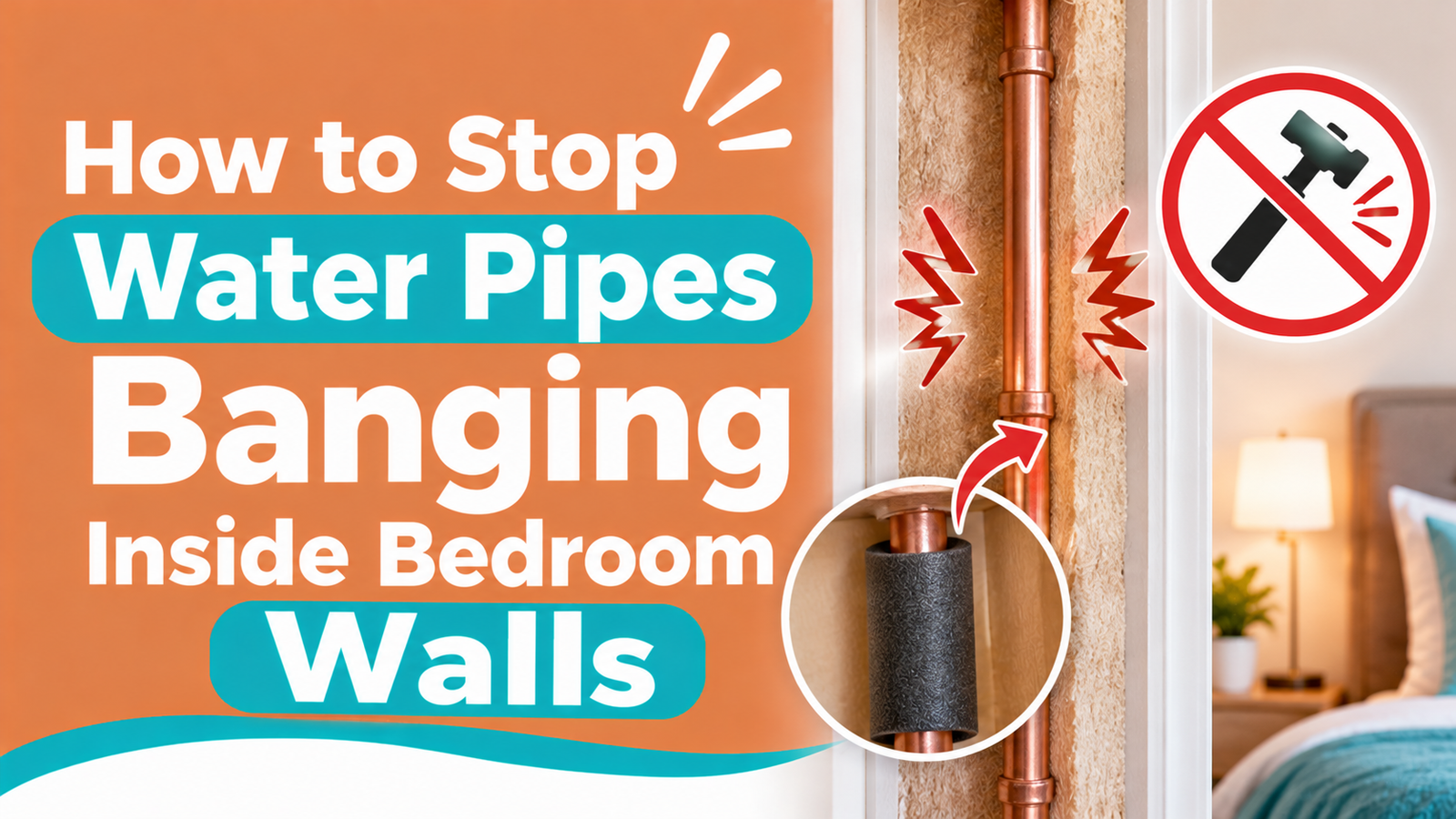
Few things ruin a quiet night like a sudden thud inside the wall next to your bed. If you are wondering how to stop water pipes banging inside bedroom walls, the good news is that the cause is usually simple, and many fixes cost very little. The noise is rarely a sign that your house is falling apart. It is almost always a pressure or movement problem that can be tracked down with a bit of patience.
Why Pipes Bang in the First Place
There are two common culprits, and it helps to know which one you are dealing with before you start fixing things.
The first is water hammer. When you turn off a tap, a dishwasher, or a washing machine, the water flowing through the pipe has to stop instantly. All that moving water has weight and momentum, so it slams into the closed valve and sends a shock wave back through the line. You hear that as a sharp bang or a series of rapid knocks. Modern fast closing valves in appliances make this much more common than it used to be.
The second culprit is loose pipes. Pipes expand slightly when hot water runs through them and shrink again as they cool. If they are not properly secured, they rub and knock against wooden studs, joists, or each other. This type of noise tends to be more of a tick, tap, or creak that you notice when the heating comes on or when someone runs a hot shower.
A simple way to tell them apart is to listen for timing. A bang that happens right when water is shut off points to water hammer. A noise that builds up slowly while hot water is running points to pipes that are moving.
Start With the Easy Checks
Before you call anyone, spend ten minutes doing a few basic checks. Run each tap in the house one at a time and see if the noise appears. Try the toilets, the washing machine, and the dishwasher too. Once you find the fixture that triggers the bang, you have a much better idea of where the problem sits.
Next, check your water pressure. High pressure is a major reason pipes slam. A pressure gauge that screws onto an outdoor tap costs very little at any hardware shop. Most homes should sit somewhere between 40 and 60 psi. If yours reads well above that, the pressure itself is probably behind the noise.
Also make sure your main shutoff valve is fully open. A valve that is only partly open can cause turbulence and rattling that sounds a lot like banging when water is running.
Fix Water Hammer With Air Chambers or Arrestors
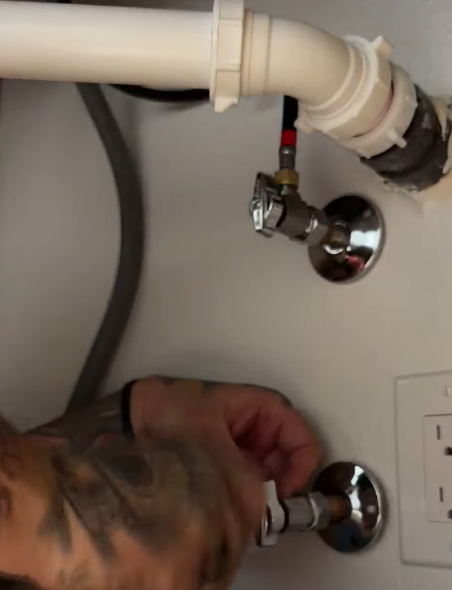
Many homes were built with small air chambers, which are short vertical pipes that trap a cushion of air near fixtures. That air acts like a shock absorber. Over time, the chamber fills with water and stops working, which is why a house can start banging after years of silence.
You can often restore the cushion yourself. Shut off the main water supply, then open the highest tap in the house and the lowest tap too, so the pipes drain fully. Leave them open for a few minutes, then close them and turn the main supply back on. Air should refill the chambers as the pipes fill again. It is a free fix and works more often than you would expect.
If that does not help, install water hammer arrestors. These small devices fit between the pipe and the appliance or fixture, and they contain a sealed piston or bladder that absorbs the shock. They are easy to fit on washing machine hoses and under sinks, and a plumber can add them inside the wall access if the problem is closer to your bedroom.
Lower the Pressure if It Is Too High
If your gauge showed a high reading, a pressure reducing valve is the proper answer. This valve usually sits near where the main supply enters your home. Some houses already have one that has worn out or drifted out of adjustment. A plumber can test it, adjust it, or replace it in an hour or two. Dropping the pressure to a sensible level often calms the whole system down and protects your appliances at the same time.
Secure Loose Pipes
If the noise sounds more like ticking or knocking as pipes warm up, the pipes need better support. Where you can reach them, such as in a basement, crawl space, or attic, add pipe clips or straps every few feet. Cushion the contact points with rubber or foam sleeves so the metal never touches wood directly.
Inside a bedroom wall, this is harder because you cannot see or reach the pipe. Sometimes there is an access panel nearby, or the pipe can be reached from a cupboard or from the room above or below. If not, a plumber may need to open a small section of drywall to anchor the pipe properly. It sounds dramatic, but a neat patch and a coat of paint make it almost invisible afterwards.
What About Pipes Running Through Tight Holes?
Pipes often pass through drilled holes in studs and joists. If the hole is slightly too snug, the pipe can grind and click as it expands and contracts. Packing the gap with a flexible insulating material usually solves it. This is another repair best done from an accessible spot rather than by cutting into the wall blindly.
When to Call a Plumber
You should bring in a professional if the banging is violent, if it keeps getting worse, or if you notice damp patches, stains, or a musty smell on the bedroom wall. These can point to a slow leak caused by stress on a joint. Also call someone if you are not comfortable shutting off the main supply or working on pressure valves. A small repair now is far cheaper than repairing water damage later.
Frequently Asked Questions
Is banging in water pipes dangerous?
Usually it is not an immediate danger, but repeated shock waves can weaken joints and fittings over time. Ignoring it for years can lead to leaks, so it is smart to fix it sooner rather than later.
Why do my pipes only bang at night?
Household water use drops at night, and street pressure often rises when fewer people are drawing water. Higher pressure makes water hammer louder. The house is also quieter, so you simply notice it more.
Can I fix banging pipes without opening the wall?
Often yes. Draining the system to refill the air chambers, installing arrestors at fixtures, and adjusting the pressure reducing valve can all be done without touching the bedroom wall. Opening the wall is only needed when loose pipes inside it must be secured.
How much does it cost to stop pipes banging?
It varies a lot. Draining the system is free, arrestors are fairly cheap, and a new pressure reducing valve costs more because of the labor. Opening and repairing a wall section adds to the bill, but most homeowners spend far less than they fear.
Will turning down the water heater temperature help?
It can help if the noise comes from pipes expanding as hot water flows through. A slightly lower temperature means less movement. It will not cure water hammer, though, so the other fixes still matter.

I’m Alex Morgan, a soundproofing researcher at Sound Proof Guides. I enjoy exploring practical ways to reduce unwanted noise, improve room acoustics, and make living spaces more comfortable. Through my articles, I share easy-to-follow soundproofing guides, DIY solutions, helpful tips, and product recommendations to help readers find the right solutions for their noise problems.