
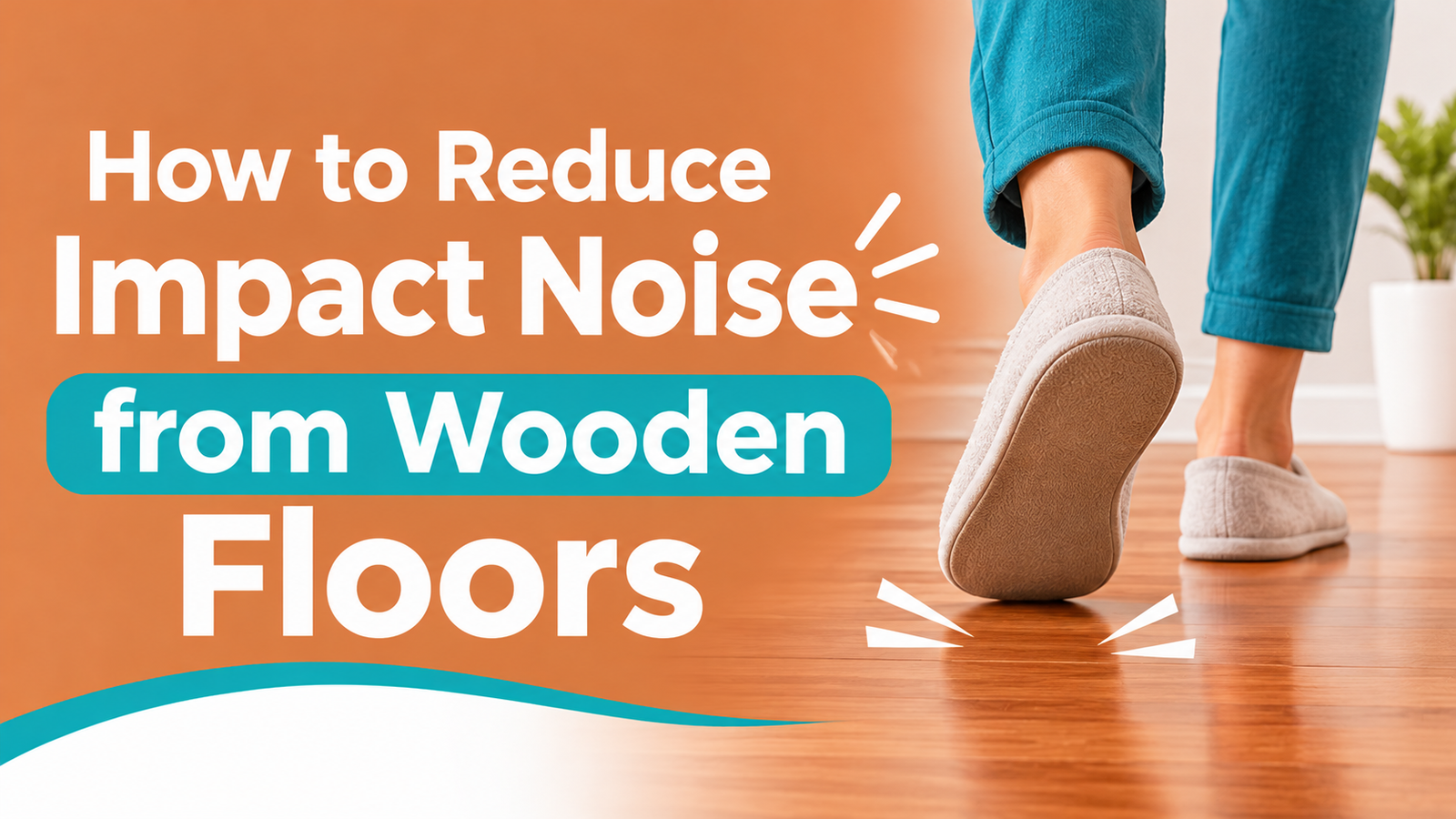
If you live in an apartment or a house with more than one level, you already know how annoying footsteps can be. Learning how to reduce impact noise from wooden floors is one of the most practical things you can do for your peace and quiet, whether the noise is coming from your own home or from the neighbors above you.
Wooden floors look great and feel warm, but they are also surprisingly good at carrying sound. Every dropped toy, scraped chair, and heavy step turns into a thud that travels through the structure.
The good news is that you do not need to tear up your whole floor to fix it. Most homes can see a real improvement with a few smart changes, and some of them cost very little.
Why Wooden Floors Are So Noisy
Impact noise is different from the voices or music you hear through walls. It starts when something physically hits the floor, like a footstep, a falling object, or a dragged piece of furniture. That energy moves into the wood and then through the joists and ceiling below, which is why the person downstairs often hears it louder than you do.
Wood is rigid and hollow underneath, so it acts a bit like a drum. The more solid the connection between your floor and the structure below, the more easily vibration travels. That is why the solutions mostly come down to two ideas: soften the surface where the impact happens, and break the path the vibration takes.
Start with Rugs and Carpet Pads

The cheapest and fastest fix is a thick area rug. Wool or dense fabric rugs absorb a good amount of impact before it reaches the wood. The real secret, though, is what you put under the rug. A heavy felt or rubber underlay can make a bigger difference than the rug itself, because it adds a cushioning layer that dampens vibration.
Focus on the places with the most traffic first. Hallways, the area around the sofa, bedrooms, and the space in front of the kitchen counter usually get walked on the most. You do not need to cover every inch, but a few well placed rugs can cut the sharp sound of footsteps noticeably.
Use Felt Pads on Furniture
Scraping chairs are one of the most irritating sources of floor noise, and they are also the easiest to solve. Stick thick felt pads under the legs of chairs, tables, and stools. Replace them every few months, since they flatten and collect grit over time. For heavier items like bookshelves or dressers, rubber furniture cups work well and also protect the wood from dents.
Add Underlayment When Installing or Replacing Floors
If you are putting down new flooring, this is the best moment to deal with noise properly. A quality acoustic underlayment sits between the wood and the subfloor and absorbs impact energy. Cork, rubber, and dense foam are the most common choices. Look for products that list an impact insulation rating, often shown as IIC, because a higher number means better performance.
Many apartment buildings have rules that require a minimum rating, so check with your building management before you start. Choosing the right underlayment now can save you from complaints later.
Seal Gaps and Loose Boards
Squeaks and creaks are a type of impact noise too. They usually come from boards rubbing against each other or against nails. You can often fix them by driving trim screws through the loose boards into the joists, or by sprinkling a little talcum powder or graphite between the boards to reduce friction.
Gaps along the edges of the room also let sound escape. Filling them with acoustic caulk helps keep vibration from jumping to the walls. It is a small job, but it makes the floor feel more solid and quiet.
Consider a Floating Floor
A floating floor is not nailed or glued to the subfloor. It rests on a cushioning layer, which separates it from the structure underneath. This is very effective for reducing noise, since the vibration has no direct path to follow. It does raise the floor height slightly, so you may need to adjust doors and transitions, but many people find the result worth the effort.
Work from Below with Ceiling Treatments
If the noise is coming from the apartment above and you cannot change their floor, you can still do something on your side. Adding a layer of mass to the ceiling, such as soundproof drywall with a damping compound, can reduce how much sound passes through.
Installing resilient channels or decoupling clips before the new drywall goes up helps even more, since they stop the vibration from traveling directly into your ceiling.
Filling the gap between the joists with mineral wool insulation is another helpful step. It absorbs sound inside the cavity instead of letting it bounce around. This type of work is better handled by a professional, but the results are often dramatic.
Small Habits That Help
Not every solution has to involve materials. Wearing soft slippers indoors reduces the hard heel strike that creates so much noise. Teaching kids to walk, not run, in the house also helps, as does placing a play mat in the area where they spend the most time. If you are the one living above someone else, a little kindness and a few rugs go a long way toward keeping good relations with your neighbors.
Final Thoughts
There is no single perfect answer, because every home is built differently. Most people get the best result by combining a few of these methods, such as rugs with underlay, felt pads, and fixing loose boards. If the noise is severe, bigger changes like new underlayment or ceiling treatments may be needed. Start with the simple fixes, listen for the difference, and then decide whether you want to go further.
Frequently Asked Questions
What is the cheapest way to reduce impact noise on a wooden floor?
A thick rug with a felt or rubber pad underneath is the most affordable option. Adding felt pads under furniture legs also costs very little and stops scraping sounds right away.
Does underlayment really make a difference?
Yes, it does. A good acoustic underlayment absorbs a large portion of the energy from footsteps before it moves into the subfloor. The effect is strongest when it is installed correctly, with no gaps and with the right thickness for your flooring type.
Can I reduce the noise without removing my existing floor?
You can. Rugs, furniture pads, fixing squeaky boards, and sealing edge gaps all work on an existing floor. If you need more, you can also treat the ceiling below, which does not require touching the wood at all.
Will a floating floor stop all noise?
It will not stop everything, but it can reduce a lot of it. A floating floor breaks the direct connection to the structure, so less vibration travels down. For the best results, pair it with a quality underlayment.
Should I hire a professional for soundproofing?
For simple jobs like rugs and felt pads, you can easily do it yourself. For ceiling work, resilient channels, or full floor replacement, a professional is usually worth it, since mistakes in these projects can reduce the benefit or even create new problems.

I’m Alex Morgan, a soundproofing researcher at Sound Proof Guides. I enjoy exploring practical ways to reduce unwanted noise, improve room acoustics, and make living spaces more comfortable. Through my articles, I share easy-to-follow soundproofing guides, DIY solutions, helpful tips, and product recommendations to help readers find the right solutions for their noise problems.